
$305.00
Description
How to Dose Glow Peptide Like a Pro for Skin Vitality
I’ve noticed a growing conversation around how to dose glow peptide so it can best support skin vitality. Whether you’re new to the topic or already exploring advanced peptide protocols, let me walk you through the essentials—from reconstitution tips to recommended daily injection cycles. My aim is to share helpful guidance that you can customize to your own wellness approach and further discuss with a qualified professional.
Begin with glow peptide basics
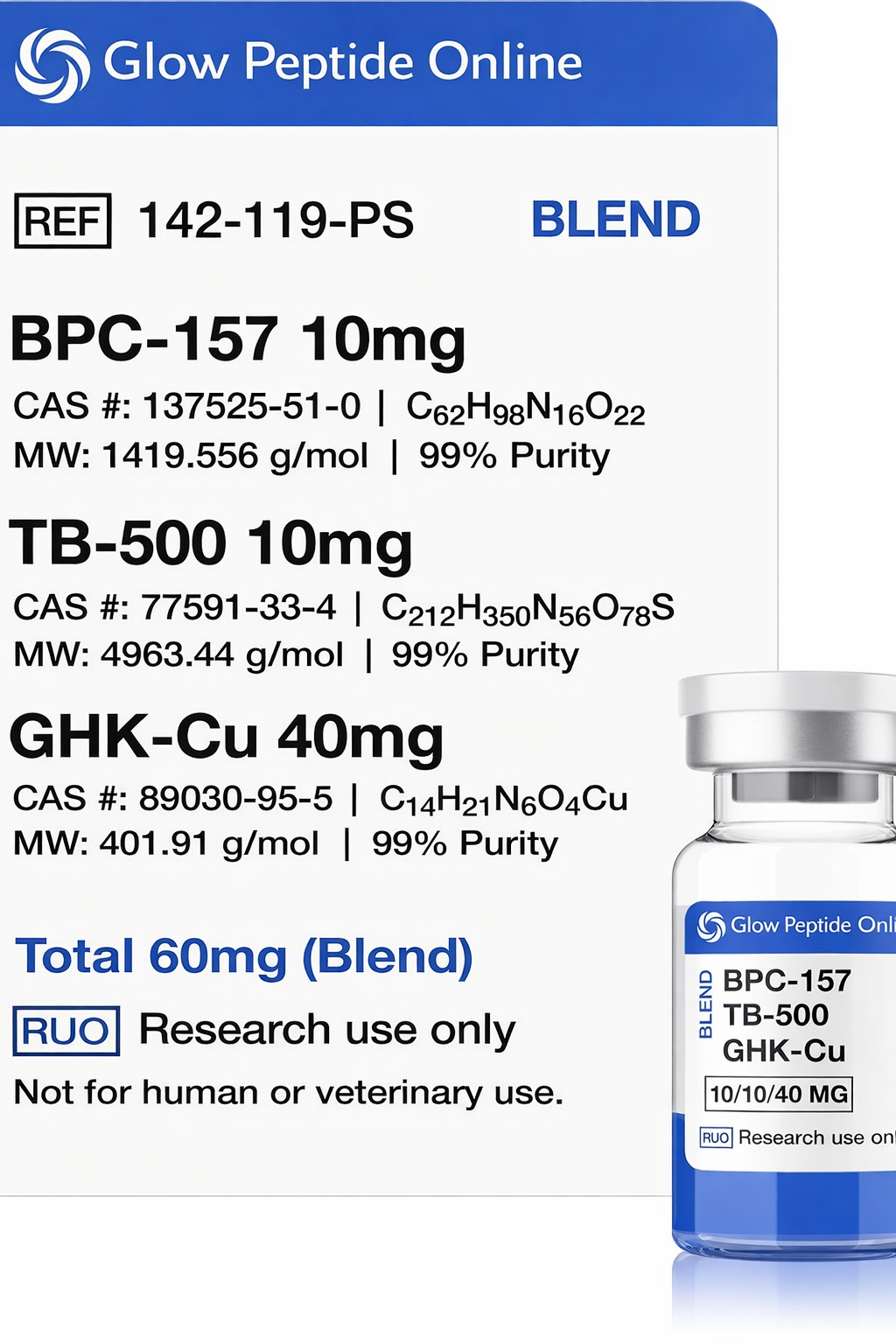
Glow peptide is a specialized blend that includes BPC-157, TB-500 (a fragment of Thymosin Beta-4), and GHK-Cu. These components work together to promote tissue repair and healthy skin appearance. GHK-Cu may help boost collagen production, TB-500 supports cell migration, and BPC-157 encourages an anti-inflammatory response. Combined, they make glow peptide a popular addition to self-care routines focused on overall vitality.
If you’re still getting familiar with its applications, you might want to read more about what is glow peptide or explore what is glow peptide used for before starting a regimen.
Follow recommended dosing guidelines
Based on the published protocols, a common approach involves:
- 0.1 mL (10 units) of glow peptide injected subcutaneously each day
- A 30-day consecutive cycle, then a 15-day break
Because each reconstituted vial provides 15 doses, you’d need two vials for a full 30-day cycle. In my experience, spacing out your regimen with that 15-day pause can help your body reset and potentially reduce the risk of side effects.
Some practitioners also reference 100-200 micrograms per day as a flexible range, depending on tolerance or targeted results. If you’re curious about more precise dosing tables, you could look into the glow protocol peptide dosage chart. For advanced research-backed insights, see the dosage protocol published on PeptideDosages.com in 2024, which breaks down concentration and injection volumes even further.
Reconstitute glow peptide carefully
Before you can inject glow peptide, you’ll need to reconstitute the vial with bacteriostatic or sterile water. I usually follow these steps:
- Clean the vial’s rubber stopper with an alcohol swab.
- Slowly inject 1.5 mL of sterile or bacteriostatic water into the vial.
- Gently swirl (never shake) the vial in a circular motion until the powder dissolves.
- Store the reconstituted mixture in the refrigerator.
By adding 1.5 mL of diluent, each vial yields 15 doses at 0.1 mL each. If you want more detail on reconstitution tips, you might also check out glow peptide reconstitution.
Leverage synergy for best results
One reason glow peptide stands out is its powerful synergy:
- GHK-Cu supports collagen production and may encourage new blood vessel formation
- TB-500 helps reduce scar tissue while promoting tissue migration and repair
- BPC-157 offers anti-inflammatory and growth factor signaling benefits
When combined, they may enhance skin’s appearance and overall tissue health more than if you used these peptides individually. For more about the blend itself, I recommend exploring glow blend peptide benefits, which goes into the potential advantages of layering these active components.
Adopt proper injection practices
Subcutaneous injections can be intimidating at first. Here’s my go-to technique:
- Choose a small insulin syringe: With dosing as low as 0.1 mL daily, a 30- or 50-unit insulin syringe helps with accuracy.
- Clean the area: Typically, the abdomen or thigh is used for subcutaneous injections. Clean thoroughly with an alcohol swab.
- Insert the needle at a 45-degree angle: Pinch the skin, push the needle in carefully, and inject slowly.
- Dispose of sharps properly: Use a sharps container to avoid accidental needlesticks or contamination.
If you’re still deciding where to administer your dose, where to inject glow peptide might help answer some of your location-specific questions.
Consider potential side effects
Although glow peptide appears well tolerated by many, it can sometimes lead to reactions at the injection site such as slight redness or swelling. I’ve also heard anecdotes about mild fatigue or lightheadedness, though these don’t seem widespread. If you’d like to learn more, you can check glow peptide side effects for a deeper look into possible issues.
As always, if you have pre-existing medical conditions or concerns about how peptides fit into your routine, consult a knowledgeable healthcare provider.
Wrap up with final thoughts
Learning how to dose glow peptide is a critical step toward experiencing what this blend might offer for skin vitality and overall tissue support. Keeping the 0.1 mL daily injection schedule, reconstituting it properly, and staying aware of any side effects ensures you can pursue your goals responsibly. If you’re looking to further optimize your approach—perhaps by stacking glow peptide with other wellness strategies—take time to do additional research and consult professionals as needed.
I’ve found that methodical use, coupled with monitoring your body’s response, makes all the difference. With a careful approach and informed perspective, glow peptide may be a valuable addition to a balanced skincare and health routine.

