
$155.00
Description
How I Mastered How to Reconstitute Glow Peptide Safely
Discover my journey with glow peptide
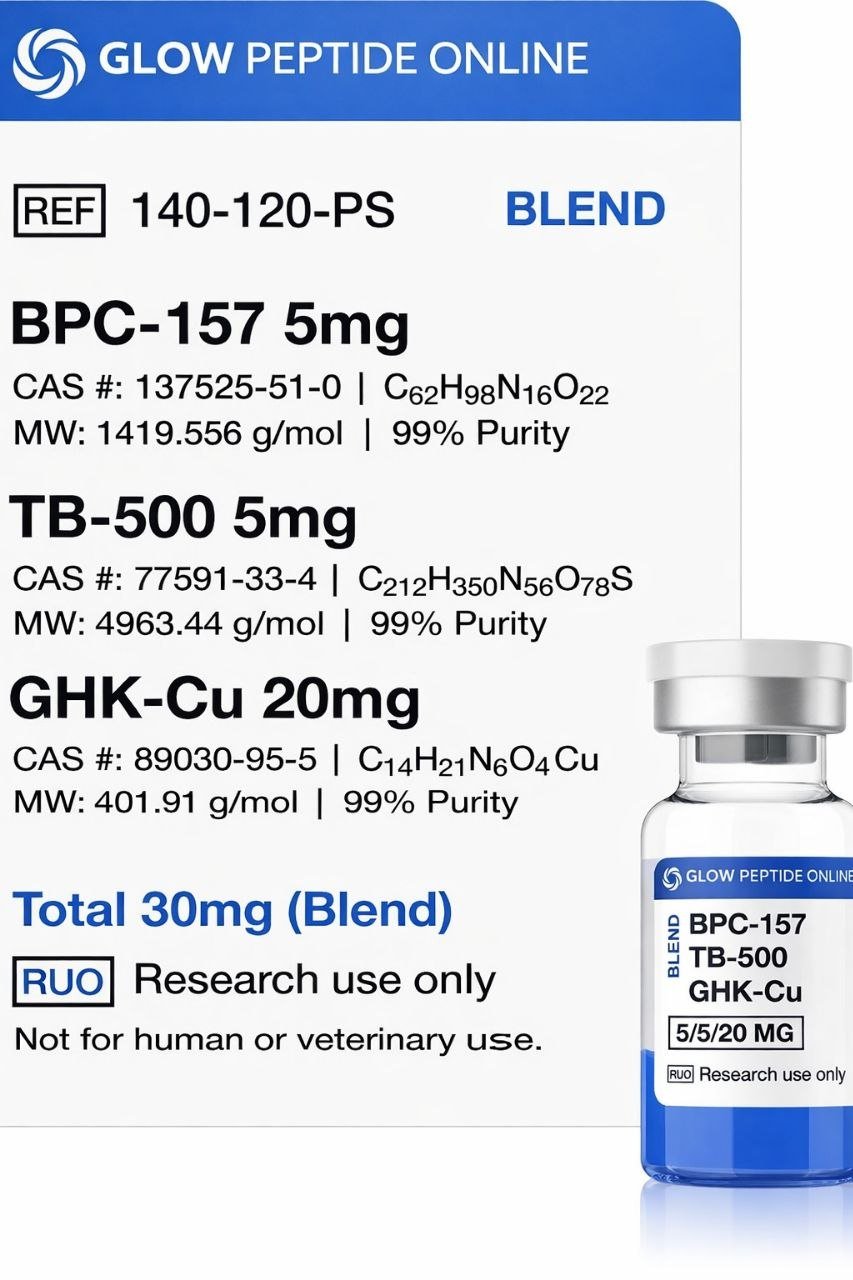
I remember the first time I heard about glow peptide and felt compelled to learn everything I could about it. Specifically, I wanted to figure out how to reconstitute glow peptide so it would retain its potency and purity. My interest initially stemmed from a broader fascination with peptides for wellness and beauty, but once I learned that glow peptide (also called a growth hormone releasing peptide) has a unique blend of BPC-157, TB-500, and GHK-Cu, I knew the reconstitution process would be crucial for the best results.
I also quickly realized that glow peptide is usually sold in a freeze-dried powder form. This powdered form preserves its active compounds for months—or even years—when stored under the right conditions. However, the real test began after I brought that vial home. Properly dissolving and handling the contents can make all the difference in final efficacy. If you want to understand its broader benefits, feel free to explore more at glow peptide benefits.
Understand why reconstitution matters
Before I go into the specifics of dissolving this unique powder, it helps to understand why reconstitution matters so much. During the freeze-drying process, moisture is removed to extend the shelf life. Once I was ready to use it, I needed to add a sterile liquid—usually bacteriostatic or sterile water—to restore the peptide into an injectable solution.
Reconstitution preserves the peptide’s integrity and allows it to be absorbed properly when administered. If the process is rushed or done incorrectly, contaminants can sneak in, or the peptide can degrade. Over time, I learned that:
- Bacteriostatic water (with 0.9% benzyl alcohol) helps slow down bacterial growth.
- Gentle handling (swirling instead of shaking) maintains peptide structure.
- Minimal exposure to air and light reduces oxidation.
Because glow peptide targets growth hormone secretion, a small mistake in preparation can compromise its entire mechanism of action. That’s why I keep a strict routine whenever I open a fresh vial.
Learn how to reconstitute glow peptide
Mastering how to reconstitute glow peptide safely took me a few tries to perfect. After reading guidelines updated in 2025 and talking with healthcare providers, I came up with a reliable, step-by-step approach. Here’s what I do:
Step 1. Gather materials
- Glow peptide vial (freeze-dried powder)
- Bacteriostatic water (or sterile water)
- 1 mL syringe
- Antiseptic wipe
- Gloves (optional but recommended for sterility)
Step 2. Clean the vial
I always start by wiping down the rubber stopper of the vial with an antiseptic wipe. Although glow peptide often comes in sealed vials, I find it best to take this extra step to keep the environment clean.
Step 3. Introduce the diluent
Using a 1 mL syringe, I withdraw the necessary amount of bacteriostatic water. The research often suggests a specific volume, such as 1.5 mL for a vial containing 5 mg BPC-157, 10 mg TB-500, and 27 mg GHK-Cu. I then angle the syringe, slowly running the water down the inner wall of the vial to avoid spraying directly onto the powder.
Step 4. Gently swirl
Rather than shaking, I swirl or tilt the vial until the solution is fully dissolved. This typically happens within seconds to a minute. Shaking vigorously might damage the peptide structure, so I remain extra cautious here.
Step 5. Verify clarity
Once the liquid looks clear and free of any visible particles, I label the vial with the date of reconstitution. This helps me monitor how long it remains viable in the fridge.
At this point, I know the glow peptide is ready for use. For anyone curious about how much to inject, see how to dose glow peptide for more details.
Store reconstituted peptides safely
It’s easy to assume that once the powder is dissolved, the hard work is done. However, reconstituted peptides can degrade quickly if not stored properly. Here’s how I handle that:
- I recap the vial immediately and place it in the refrigerator at about 4°C.
- Each day, I remove it briefly to measure my dose—usually around 0.1 mL (10 units) as recommended for daily subcutaneous injections.
- I rotate injection sites (abdomen, thigh, or upper arm) to avoid irritation and maintain consistency. For more injection tips, check out glow peptide injection.
- If I need a higher dose within the recommended 100–200 micrograms per day range, I still follow the same sterile steps.
I also avoid repeatedly freezing and thawing my reconstituted peptide, because that can break down its structure. Generally, I stick to the 30-day protocol—administering it daily, then taking a 15-day break before deciding if I want another cycle.
Consider final reflections
Mastering how to reconstitute glow peptide has truly helped me maximize its potential effects. From storing the freeze-dried vial in low temperatures to carefully adding bacteriostatic water, every step influences the final outcome. I’ve found that paying meticulous attention to sterility, clarity, and temperature control makes a significant difference in how I respond to the peptide over time.
For anyone exploring glow peptide, I suggest investing in reputable sources, measuring each step carefully, and following recognized guidelines. Doing this has boosted my confidence and eased concerns about peptide stability or contamination. If you want further insights, you can also check glow peptide reconstitution for a concise overview.
Overall, this journey has taught me that in the world of peptides, details matter. I hope my insights help you stay safe, extend the shelf life of your glow peptide, and get consistent results with every injection.

